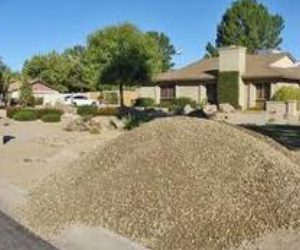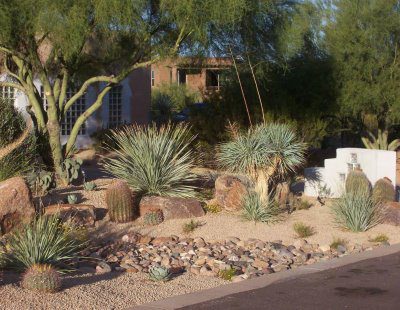
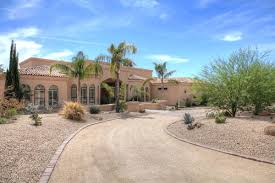
1/4" or 3/8" minus is great for driveways or pathways. Madison Gold or Table Mesa Brown creates nice accent colors.
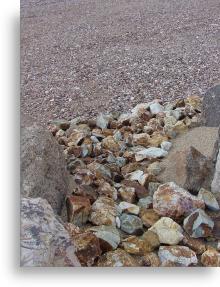
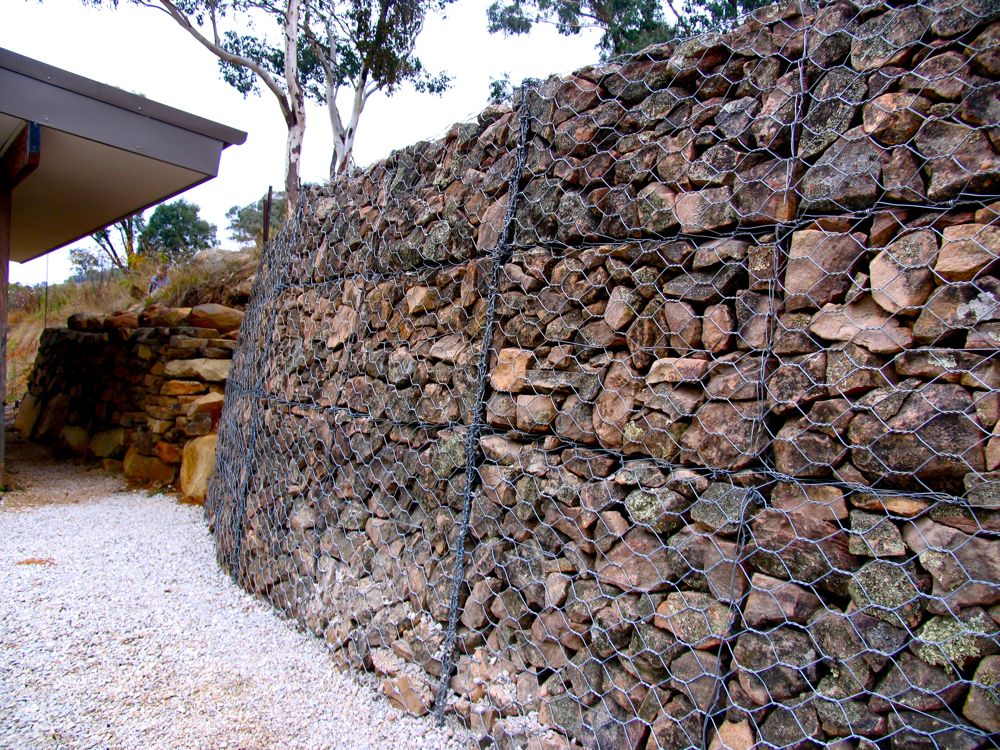
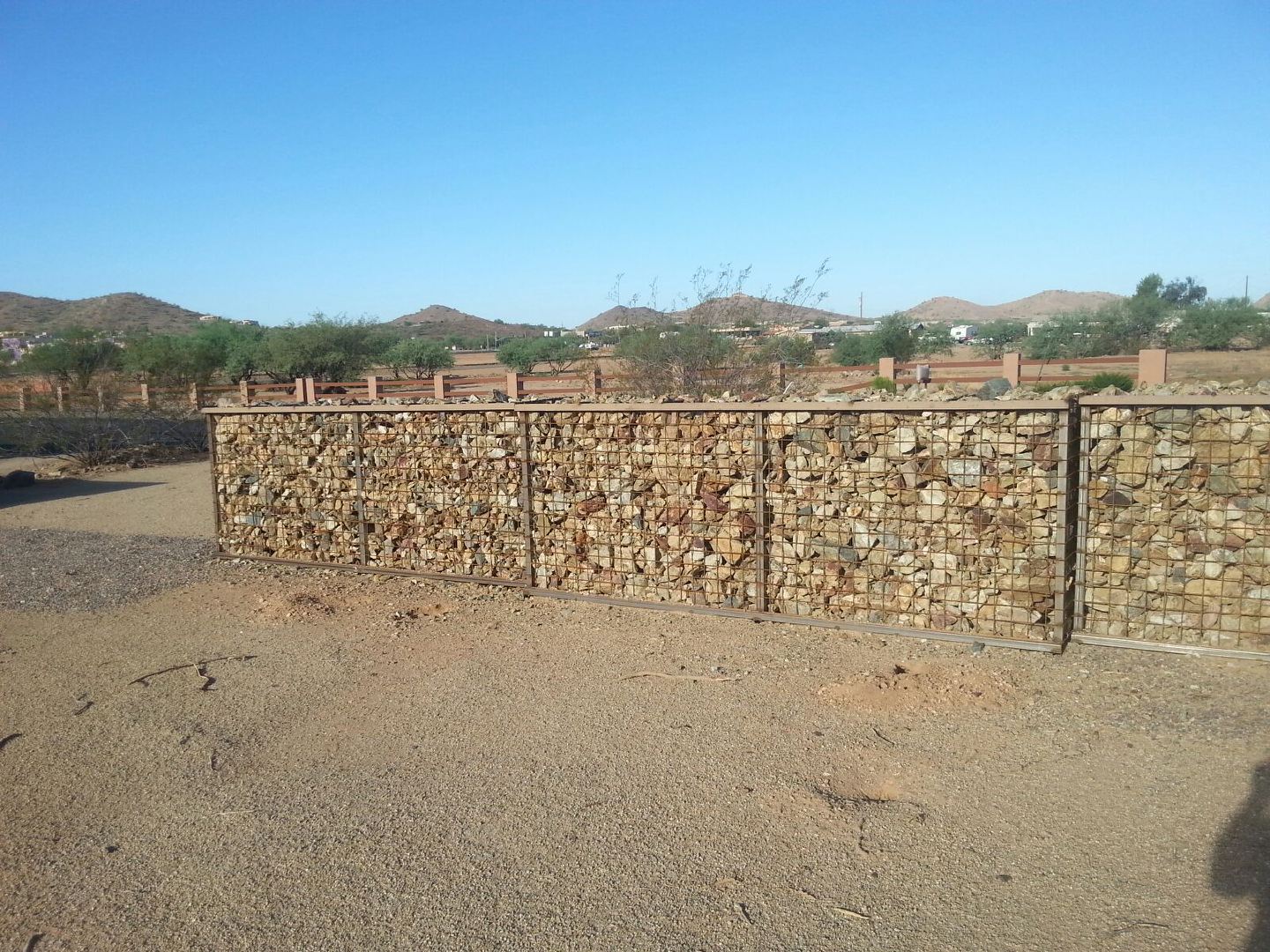
Rip Rap is great for creating dry river beds, erosion control, wall columns or gabion fences.
Coverage Chart
Material quantity can be determined by computing the square footage of the area being landscaped.
Measure the length of area and multiply by the width of the area to get your square footage.
Length x Width = Square Footage (example 15'x25' = 375')
Divide 375' by 100 = 3.75 tons of material, 2" in depth
Rock
1 ton of rock will cover approximately:
- 100 sq. ft. 2" deep
- 80 sq. ft. 3" deep
- 60 sq. ft. 4" deep
- 40 sq. ft. 6" deep
Rip Rap
1"-4" rock will cover approximately:
- 80 sq. ft. per ton
3"-8" rock will cover approximately:
- 65 - 75 sq. ft. per ton
Figuring Square Footage
Driveway or Pad
Example 1
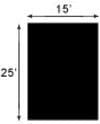
Standard Driveway or Pad:
15'x25' = 375 square feet
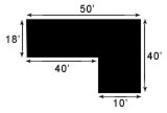
L - Shaped Driveway or Pad
Example 2
This would be done in two sections
18'x40' = 720 square feet
10'x40' = 400 square feet
400' + 720' = 1, 120 square feet
1 Ton = 2,000 LBS
1 Ton = 5-1/2 Level Wheelbarrows
1 Yard = 7 Level Wheelbarrows
1 Cubic Yard = 6-7 Level Wheelbarrows
20 Shovels = 3 Cubic Foot Wheelbarrow